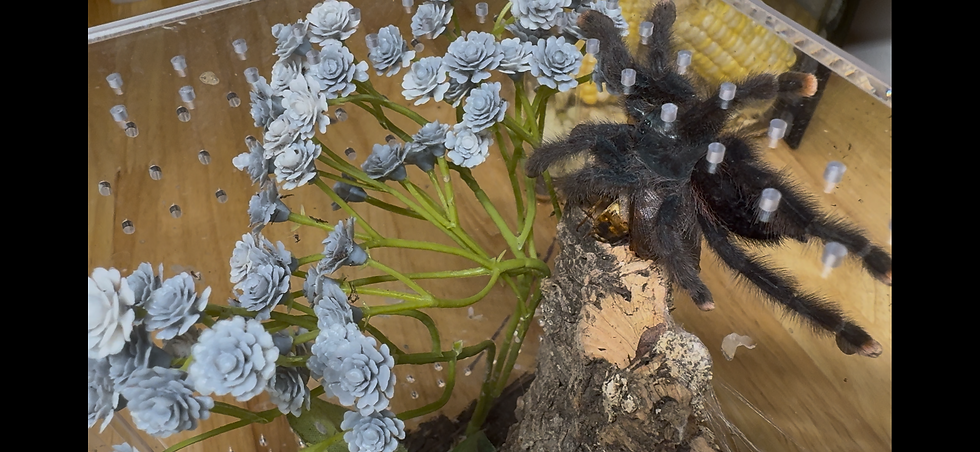
Avicularia avicularia
Pinktoe Tarantula
Origin
New World
Native Range
Region: Northern South America
Countries:
-
Brazil
-
Guyana
-
Suriname
-
French Guiana
-
Venezuela
-
Trinidad and Tobago
Type
Arboreal
Pinktoe tarantulas inhabit tropical rainforests where they spend their lives in trees, shrubs, and other elevated hiding places. Warm temperatures, seasonal rainfall, and excellent airflow characterize much of their natural habitat.
Overview
The Pinktoe Tarantula (Avicularia avicularia) is one of the most recognizable arboreal tarantulas in the hobby and is often recommended as an introduction to tree-dwelling species. Native to the tropical forests of northern South America, these tarantulas are known for their dark bodies, distinctive pink feet, and calm, deliberate movements.
Unlike many terrestrial tarantulas, A. avicularia spends nearly its entire life above the ground, constructing dense silken retreats among branches, leaves, and tree hollows. Their beautiful web structures and gentle demeanor make them fascinating display animals when provided with a properly designed enclosure.
While generally considered a beginner-friendly arboreal species, successful husbandry depends on providing excellent ventilation alongside appropriate humidity rather than maintaining constantly damp conditions.
GENERAL HUSBANDRY
Temperature
Recommended: 72-80*F (22-27*C)
Brief fluctuations outside this range are generally well tolerated, but maintaining stable room temperatures promotes healthy growth and feeding.
Humidity
Rather than chasing a specific humidity percentage, focus on providing access to fresh water while allowing the enclosure to dry between light waterings.
Lightly moistening a portion of the substrate or enclosure after it dries can help maintain suitable conditions without creating stagnant, overly wet environments.
Ventilation
Excellent cross-ventilation is essential
This species benefits from fresh airflow throughout the enclosure. Good ventilation helps prevent stale, damp conditions that may contribute to husbandry issues.
Feeding
Slings
-
Flightless fruit flies
-
Small crickets
-
Red runner nymphs
Feed approximately every 4–7 days.
Juveniles
-
Small to medium crickets
-
Dubia roaches
-
Red runner roaches
Feed every 7–10 days.
Adults
-
Large crickets
-
Dubia roaches
-
Red runners
Most adults thrive when fed every 10–14 days.
**Always provide fresh water regardless of feeding schedule.**
Enclosure Design
Substrate & Decor
Pinktoe tarantulas require a vertically oriented enclosure with plenty of climbing opportunities.
Recommended Features
-
Vertical cork bark or cork tubes
-
Artificial or live foliage
-
Multiple web attachment points
-
Water dish mounted or placed near elevated areas if practical
-
Deep enough substrate to retain some moisture, though the spider rarely uses the ground
Acrylic arboreal enclosures with abundant ventilation work particularly well.

Growth & Size Metrics
Growth Rate: Moderate
Specify diagonal leg span here. Provide average measurements for both males and females if distinct.
Adult Leg Span: 4.5–5.5 inches
Adult Female Lifespan: 10–12 years
Adult Male Lifespan: 3–4 years
Behavioral Observations
Pinktoe tarantulas are generally considered one of the calmer arboreal species, although individuals can be surprisingly quick when startled.
Rather than displaying defensive behavior, they often choose to retreat into their webbed hide or move rapidly through the enclosure. They frequently construct elaborate silk retreats near the upper portions of their enclosure and may spend long periods resting inside these structures during daylight hours before becoming more active after dark.
Quick Facts
-
Difficulty: Beginner-Intermediate
-
Venom Significance: Mild (New World)
-
Urticating Hairs: Type II (Released by direct contact instead of kicking)
-
Display Species: Excellent
-
Webbing: Heavy
-
Temperament: Generally calm
-
Visibility: Moderate
-
Speed: Moderate to fast
-
Climbing: Excellent